
Spring in the Field: Bird Monitoring Season on Montana’s Conservation Ranches
April 13, 2026
Across Montana, the signs of spring are unmistakable. Mountain Bluebirds and Western Meadowlarks sing from fence posts, and small flocks of Tree Swallows chatter overhead. The cheery “po-ta-to chip, po-ta-to chip” call of American Goldfinches accompanies strolls along the riverbanks, punctuated by bright flashes of yellow from their newly-grown breeding plumage.
The grass is greening, the days are stretching longer, and a familiar anticipation is building. Spring has arrived — and with it, another season of bird monitoring for the Montana Audubon science team. Starting next month, the team will pack up binoculars and clipboards and head out to survey breeding birds across the pastures, grasslands, and sagebrush steppe of ranches enrolled in the Montana Audubon Conservation Ranching (ACR) program.
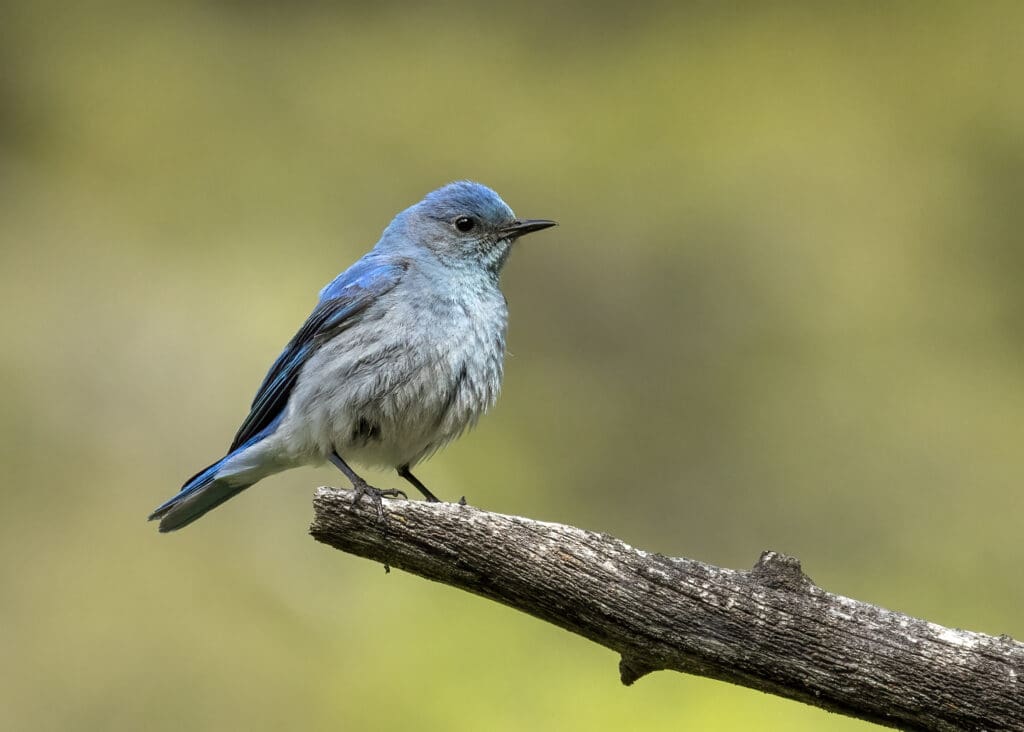
Mountain Bluebird. Photo: Bob Martinka
To date, more than 500,000 acres across 29 ranches in Montana have been enrolled in the ACR program. These ranches partner with Montana Audubon to implement adaptive Habitat Management Plans designed to maintain, create, and enhance bird habitat. Given the well-documented decline of grassland bird populations, this work has never been more important. Once ranches earn Bird-Friendly Certification, they can start using the distinctive green seal, letting consumers know these products were raised on land that is managed to support bird populations. To ensure that land management practices are actually benefiting bird communities, rigorous monitoring is essential.
This summer will be our biggest ACR ranch field effort yet, with our staff conducting 55 bird surveys across 25 ranches. Survey preparation is well underway. The science team has been hard at work mapping ranch boundaries and determining survey points across each property. All surveys will be conducted between mid-May and early July to coincide with peak breeding activity. Each surveyor starts a half-hour before sunrise and works for five hours, completing ten six-minute point counts per survey — recording every bird detected by sight or sound, and noting the minute of detection and the distance to each individual or flock using a rangefinder.
The work demands expert-level birding skills. Picture standing on a vast prairie alive with Horned Larks, longspurs, Lark Buntings, and Sprague’s Pipits performing aerial display flights; Long-billed Curlews dive-bombing in territorial defense; Western Meadowlarks and Vesper Sparrows singing from fence posts; Grasshopper Sparrows buzzing quietly from the tall grass below; Franklin’s, Ring-billed, and California Gulls drifting overhead; and Swainson’s Hawks and Golden Eagles kettling high in the thermals. Sorting it all out in real time while noting distances and timestamps for each bird (and not double-counting any of them) is as challenging as it is exhilarating.
Each summer, these data feed into a “Bird Friendliness Index,” developed by our partner National Audubon, for each enrolled ranch. We also share bird lists and other information with ranches, letting them know each year what species they share space with on their land.
After a winter in the office preparing, the science team is excited to head back into the field and to spend the summer traveling to ranches across the state. Read ACR news, learn how to certify your ranch, and find a map of where to buy certified products on our website: Audubon Conservation Ranching.
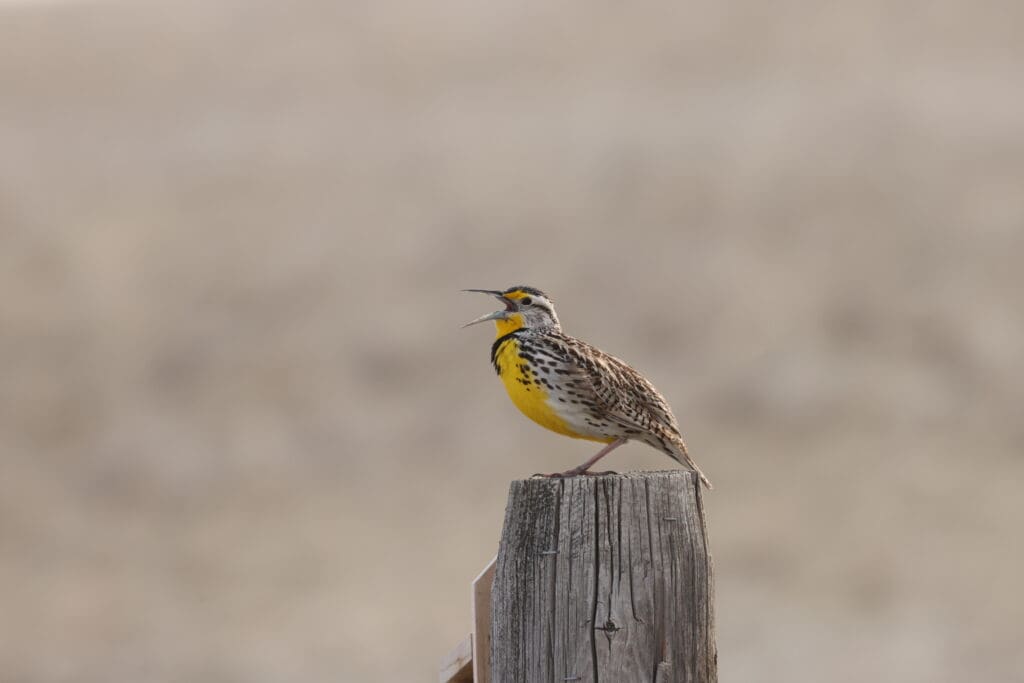
Western Meadowlark. Photo: Bob Martinka