
Black Swift
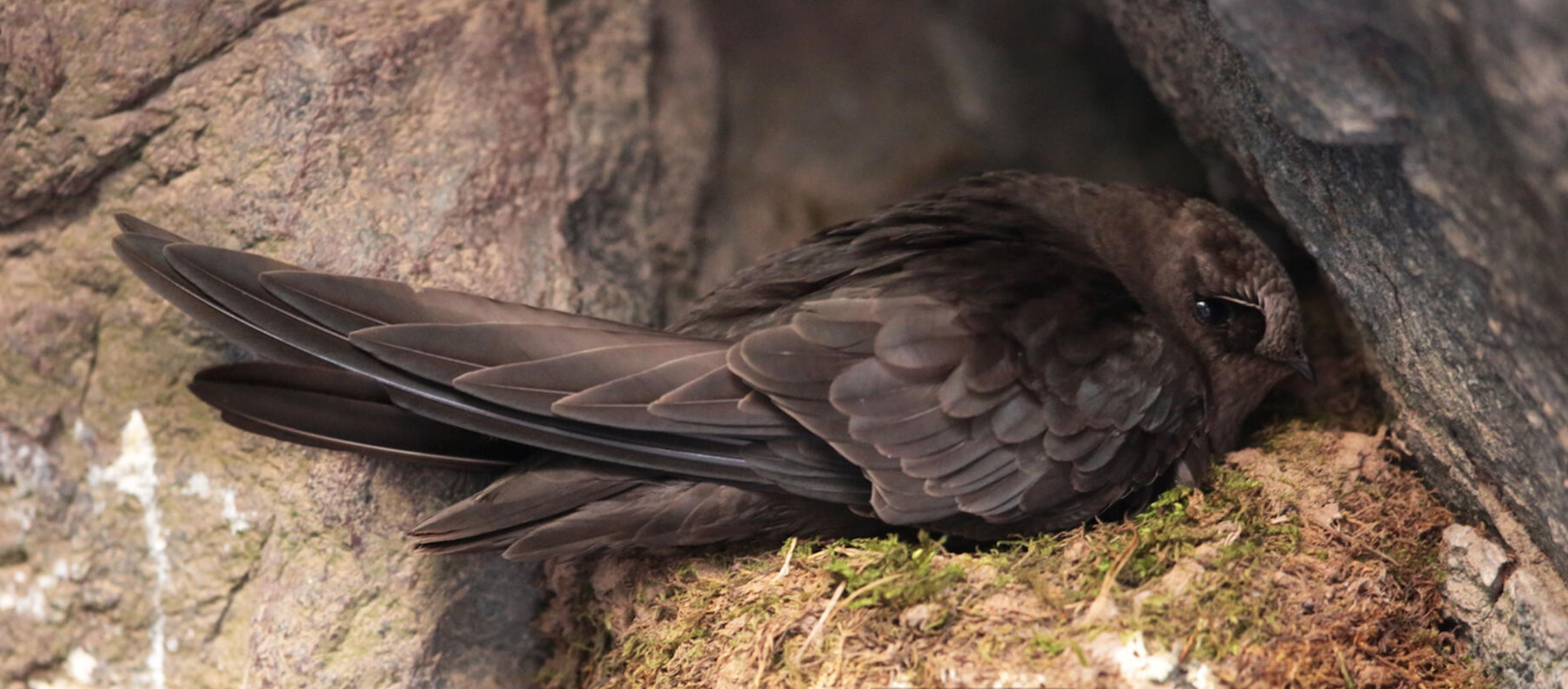 Black Swifts were the last avian species described in North America, discovered in 1857, and were one of the most mysterious until their interior western North American waterfall nesting habitat was discovered in 1919. It took until the 1960s for Black Swift nesting sites, or nesting colonies, to be discovered in Montana, and up until 2015, there were still just seven known sites. Not surprisingly, the Black Swift is listed as a state species of conservation concern, and a state species of greatest inventory need.
Since the 2014 field season, Montana Audubon has been organizing volunteer and professional research teams to search for this elusive species throughout western Montana. We are partnering internationally, regionally, and close at home with Glacier National Park, Glacier National Park Conservancy, and Montana Fish, Wildlife & Parks to find out just where our Black Swifts are active and breeding. So far, our efforts have helped bring the total number of known nesting sites to over 50, a five-fold increase in just five years.
Continuing to inventory this elusive species through 2020 is paramount, as climate change threatens to impact the Black Swift’s glacier-fed waterfall habitat, and as aerial insectivores experience declines across the country. Our urgency to understand this species has increased in light of Black Swifts receiving “endangered” status throughout Canada in 2015.
Black Swift survey reports from Glacier National Park
- Black Swift GNP Survey 2019
- Black Swift GNP Survey 2018
- Black Swift GNP Survey 2017
- Black Swift GNP Survey 2016
- Black Swift GNP Survey 2015
- Black Swift GNP Survey 2013